

Best Fish Bag for Offshore Trolling: Rugged Gear for Real Anglers
Hard-shell coolers are a liability on a wet deck. They slide. They take up too much space. They fail when the sun hits them for ten hours straight. If you're serious about your catch, you need gear built for the environment, not the showroom. Finding the best fish bag for offshore trolling isn't about buying the most expensive brand. It's about finding industrial-grade insulation that keeps meat sushi-grade until you hit the dock.
You've seen ice melt before the first line even tightens. It's a waste of money and a disrespect to the fish. We'll show you why professional-grade insulation and specific sizing are the keys to keeping your offshore catch fresh in the harshest marine environments. This guide breaks down the technical specs of rugged kill bags, explains how to maximize your deck space, and helps you select gear that survives seasons of heavy salt use without zipper failure or high-priced brand markups. You'll learn what to look for in a bag that works as hard as you do.
Key Takeaways
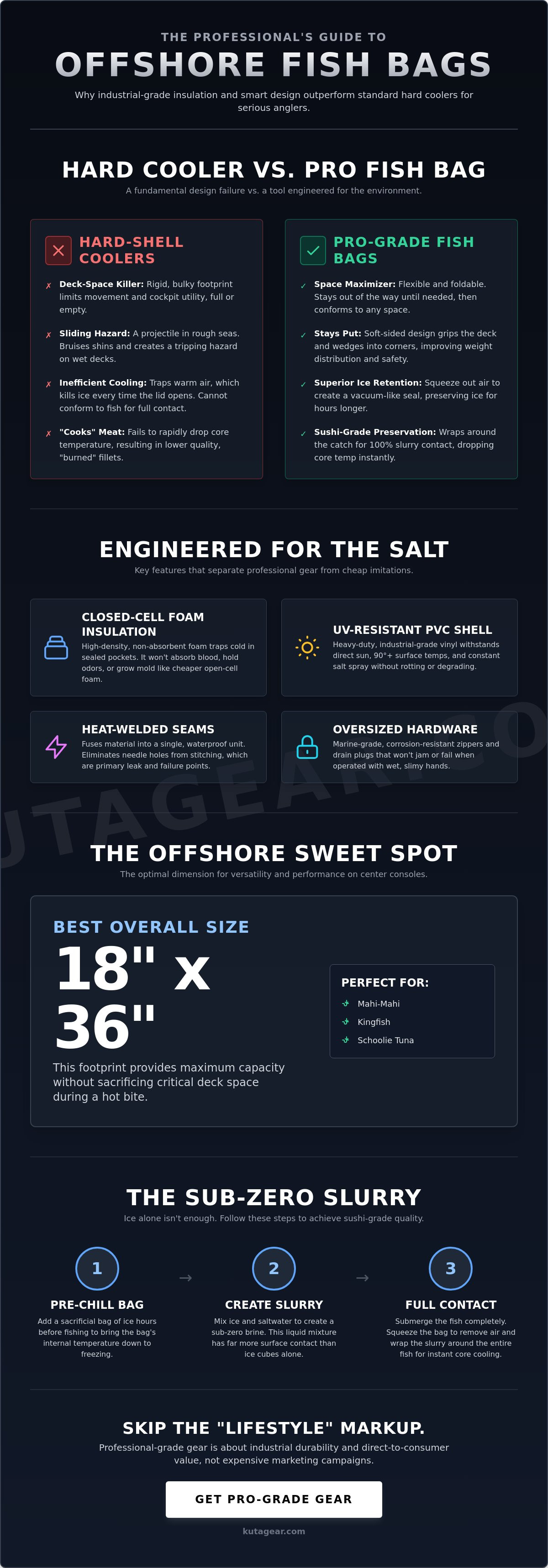
- Rigid coolers are deck-space killers. Learn why flexible kill bags outperform hard shells by staying put and maximizing cockpit utility during a hot bite.
- Don't settle for absorbent foam. Look for closed-cell insulation and UV-resistant PVC that won't rot, leak, or hold fish blood after a long day.
- The 18" x 36" footprint is the best fish bag for offshore trolling on center consoles. It's the optimal dimension for mahi, kingfish, and schoolie tuna.
- Ice alone isn't enough. Master the sub-zero brine slurry and pre-chilling tactics that maintain sushi-grade quality even in direct tropical sun.
- Skip the "lifestyle" markup. Professional-grade gear should focus on industrial durability and direct-to-consumer value rather than expensive corporate marketing campaigns.
The Offshore Trolling Challenge: Why Standard Coolers Fail
Hard-shell coolers are a liability in a working cockpit. They are static objects in a dynamic environment. They don't belong on a boat built for action. When you are trolling offshore, every square inch of deck space is a premium. A rigid plastic box is a deck-space killer. It stays the same size whether it is full of trophy Mahi or completely empty. It limits your movement during a hot bite. Finding the best fish bag for offshore trolling is about reclaiming your deck and protecting your catch. A flexible bag adapts to the boat. A hard cooler expects the boat to adapt to it. That is a fundamental design failure for any serious angler.
The physics of ice retention also favor the bag. Hard plastic lacks the flexibility to "burp" air. Air is the primary enemy of ice. Every time you open a rigid lid, you lose your cold bank. You can't compress a hard cooler to remove the dead space. A professional-grade kill bag allows you to squeeze out the oxygen. It creates a vacuum-like environment that keeps ice solid for hours longer than a standard retail cooler. It is a tool designed for the environment, not a picnic accessory rebranded for the salt.
The Problem with Deck Space and Safety
A 100qt rigid cooler is a projectile in a following sea. If it is not bolted to the deck, it is a hazard to the crew. It slides on wet gelcoat. It bruises shins. It trips the mate during a gaff shot. Soft-sided bags offer a distinct "fold-away" advantage. You keep the bag rolled up and out of the way until the first strike. Once the fish is on the deck, the bag comes out. These bags conform to the gunnels or the bow. They wedge into corners where a square box won't fit. This creates better weight distribution. It keeps the center of gravity low and the cockpit clear for the fight.
Meat Quality and Heat Transfer
Pelagic fish like Mahi and Tuna are high-metabolism machines. They generate intense internal heat. That heat continues to cook the meat post-catch if it isn't neutralized immediately. The first 30 minutes post-gaff determine the quality of your fillets. If you throw a hot Tuna into a hard cooler with a few bags of ice, the core temperature stays high too long. You get "burned" meat. A flexible bag allows for a true sub-zero brine slurry. The bag wraps around the fish. It ensures 100% surface contact with the ice. This is the only way to achieve immediate core-temperature reduction. You preserve sushi-grade quality instead of settling for cat food.
Engineering for the Salt: Critical Features of a Trolling Kill Bag
Offshore environments are brutal. Saltwater corrodes hardware. UV rays rot fabric. Blood breeds bacteria. The best fish bag for offshore trolling isn't a luxury; it's a piece of industrial equipment. You need materials that withstand 90-degree surface temps and constant salt spray. Cheap bags fail at the zipper or leak at the seams. Real gear uses heavy-duty, UV-resistant PVC or vinyl for the outer shell. This isn't about looking good at the dock. It's about preparedness and reliability in the stream.
Hardware must be oversized. You'll be operating these zippers with wet, slimy hands. Plastic or marine-grade metal with corrosion-resistant coatings is the absolute standard. If the zipper jams when the bite is on, the bag is useless. Integrated drain plugs are just as critical. You need to manage melt-water without dumping the entire bag. Proper drainage keeps the slurry at the right consistency without adding unnecessary weight to the boat. It allows for a cleaner transition from the deck to the dock.
Closed-Cell Foam vs. Open-Cell Insulation
Open-cell foam is a sponge. It absorbs fish blood. It holds water. It grows mold. Once the smell sets in, it's permanent. High-density closed-cell foam is different. It's non-absorbent. It provides superior thermal insulation by trapping air in tiny, sealed pockets. This creates a barrier that stops heat transfer dead. Even in high-heat environments, these layers maintain sub-zero temperatures for the duration of the trip. Following best practices for fish handling ensures your catch is ready for this environment the moment it leaves the water.
Seams and Leak Prevention
Stitched seams are leak points. Every needle hole is a potential failure. Heat-welded seams fuse the material together. They create a single, waterproof unit. We call this the "truck bed test." You should be able to toss a full bag into your vehicle without worrying about tuna blood ruining the upholstery. Look for reinforced handles that are wrap-around or cross-stitched. Lifting 50+ lbs of fish and ice puts immense stress on the gear. It has to hold. For those who fish 100 days a year, an insulated fish bag built with these specs is the only logical choice. It provides professional-grade storage without the corporate markup.
Finding the Sweet Spot: Why 18x36 is the Ultimate Trolling Dimension
Corporate brands push six-foot bags because they have higher margins. They want you to buy a trophy bag you will never fill. For the serious angler, the 18" x 36" dimension is the tactical choice. It is the best fish bag for offshore trolling because it balances capacity with cockpit reality. It fits perfectly in the bow of a center console. It wedges into a corner without obstructing the walk-around path. A massive bag is a trip hazard. This size is a tool, not a liability. It stays where you put it and does its job without demanding half the deck space.
Portability is a major factor. A 36-inch bag is manageable for a single person. You can carry it from the boat to the truck without a crew. This efficiency extends to your ice usage. Large bags have massive internal volume that must be cooled before they become effective. They waste ice on empty space. An 18x36 bag reaches sub-zero temperatures faster. You use less ice to protect the same amount of meat. That means less weight on the boat and less time at the ice house. It is the most efficient way to manage a day's catch.
Species Compatibility for the 36-Inch Bag
Standard offshore targets like Mahi, Kingfish, and schoolie Tuna are the primary focus. They fit this bag with room to spare. If you land a longer fish, the head-to-tail overlap method is the solution. You curve the fish to utilize the internal depth of the bag. This is the preferred size for high-volume meat runs and tournament weigh-ins. It organizes the catch. It prevents the bottom layer of fish from being over-compressed by sheer weight. You keep the fillets firm and the quality high. It is about professional results, not just storage.
Logistics and Storage
Cleaning a five-foot bag is a nightmare. It is heavy. It is awkward. It never seems to dry. The 18x36 bag is the easiest to maintain in a standard backyard setting. You can flip it, scrub it, and hang it to dry in minutes. When the season ends, it stows away effortlessly. It folds flat and takes up zero space in the garage. It also fits perfectly on standard hitch carriers or ice chest racks. For the person who fishes 100 days a year, this is the best fish bag for offshore trolling because it provides industrial utility without the corporate markup or logistical headaches of oversized gear.
Maximizing Freshness: Ice Strategy and Bag Maintenance
Ice management is a technical skill. If you treat your gear like a grocery store bag, your catch will suffer. Even the best fish bag for offshore trolling requires a specific strategy to maintain sub-zero temperatures in the Gulf Stream. It starts before you leave the dock. A hot bag stored in a Florida garage will melt your first 20 pounds of ice in minutes. Pre-chill the interior. Use a sacrificial bag of ice or cold water the night before. This stabilizes the insulation. It ensures that the ice you pay for actually cools the fish instead of the bag's liner.
Loading the bag is about thermal contact. When the first fish hits the deck, it goes to the bottom. You want the heaviest concentration of cold to hit the core immediately. Don't just toss it on top of the ice. Bury it. This prevents the internal heat of the fish from radiating into the air space of the bag.
The Perfect Trolling Brine
A "dry" bag of ice is inefficient. Air pockets between cubes act as insulators. They keep the cold away from the fish. You need a slurry. A sub-zero brine solution is the gold standard for core-temperature reduction. Follow these steps:
- Fill the bag one-third with crushed or cubed ice.
- Add two to three gallons of clean seawater.
- Add a half-cup of kosher salt to further depress the freezing point.
This slush provides 100% surface contact. It kills the core temp of a Mahi or Tuna in minutes. It also preserves the skin texture. Dry ice or direct contact with frozen blocks can "burn" the skin, ruining the presentation. Manage the drain plug carefully. You want to bleed off excess melt-water without losing the concentrated brine. Keeping the slurry at the right level is the difference between a fresh catch and a spoiled one.
Long-Term Bag Maintenance
Blood is corrosive. Salt is worse. Post-trip care is non-negotiable if you want the best fish bag for offshore trolling to survive more than one season. Wash the interior with mild dish soap and fresh water. Avoid harsh bleach. High concentrations of bleach degrade the UV-resistant PVC over time. It makes the material brittle. Once clean, you must dry it open. Propping the bag open with a PVC pipe or a block ensures airflow. This prevents mold growth and stops the zipper from seizing. Lubricate the zipper teeth with a silicone-based marine grease. This ensures smooth operation when your hands are covered in salt and slime during the next trip. If you are ready for gear that handles the abuse, get the 18" x 36" insulated fish bag designed for real anglers.
Kuta Gear: Professional Grade Storage Without the Corporate Markup
Corporate brands sell you a lifestyle. They spend millions on marketing campaigns and athlete endorsements. You pay for those social media ads every time you buy their gear. We don't sell logos. We sell equipment. Our direct-to-consumer model removes the retail middleman and the "prestige" pricing. This is why we offer the best fish bag for offshore trolling for anglers who prioritize performance over status. Every dollar of the purchase price goes into industrial-grade materials and technical construction. You get a tool that performs better than the high-priced alternatives without the unnecessary markup.
We built this gear for the person who fishes 100 days a year. It isn't for the casual boater who stays at the dock when the wind picks up. It is for the professional mate and the dedicated weekend warrior. We understand that gear failure isn't just an inconvenience; it's a wasted trip. Our construction focuses on the points where other bags fail. We use heavier shells. We use more durable zippers. We use better insulation. We provide a reliable partner for your most demanding offshore runs.
The Kuta Gear Philosophy
Function over fashion. That is our standard. We don't care about the latest color trends or aesthetic frills. We care about heat-welded seams that won't leak tuna blood in your truck. We care about UV-resistant shells that won't crack after a summer in the sun. Our gear is engineered for the Pacific. It is built to handle extreme heat and heavy salt loads without flinching. The 18" x 36" Insulated Fish Bag is our flagship for a reason. It is the only storage solution most offshore anglers need. It provides the tactical footprint required for center consoles while maintaining the volume needed for a heavy limit of Mahi or Tuna.
Ready for the Next Run
We don't believe in long lead times or "out of stock" excuses. We keep gear in stock so you are ready for the next weather window. When the bite is on, you can't wait six weeks for a shipping notification. We provide quick shipping and reliable customer support for the national angling community. Join the thousands of anglers who have ditched the bulky, sliding cooler for a tactical solution that stays put and keeps meat fresh. It is time to upgrade to gear that works as hard as you do. Get the 18" x 36" Insulated Fish Bag from Kuta Gear today.
Ready Your Deck for the Next Strike
A sliding plastic cooler is a liability you don't need in a working cockpit. Professional-grade gear prioritizes deck space and thermal efficiency over brand-name prestige. You've learned that a 18" x 36" footprint is the tactical sweet spot for center consoles and standard offshore species. You also know that a sub-zero brine slurry is the only way to lock in meat quality immediately after the gaff. Choosing the best fish bag for offshore trolling is about more than storage; it's about industrial reliability in the salt.
Don't settle for gear that rots or zippers that seize after one season. Upgrade your offshore game with the Kuta Gear 18" x 36" Insulated Fish Bag. This flagship bag offers heavy-duty insulated construction and is specifically engineered for extreme marine environments. It provides the durability you need without the corporate markup. Stop fighting your gear and start focusing on the spread. The next weather window is coming. Be ready to fill the bag.
Frequently Asked Questions
How long will ice stay frozen in an insulated fish bag?
Ice typically lasts 24 to 48 hours in a professional-grade bag. High-density closed-cell foam prevents heat transfer even when surface temperatures hit 90 degrees. You must pre-chill the interior to achieve maximum retention. A bag that isn't pre-chilled will waste the first ten pounds of ice just cooling the liner. Proper ice management ensures your catch stays sushi-grade from the stream to the dock.
Are fish bags really better than rotomolded coolers for offshore trolling?
Yes. Fish bags offer a tactical advantage that hard coolers cannot match. They don't slide on wet decks. They don't bruise your shins in a following sea. A bag conforms to the gunnels and bows of a center console to maximize deck space. When the trip is over, you fold it flat. A rotomolded cooler remains a bulky, static obstacle whether it is full or empty.
Will an 18x36 bag leak fish blood inside my boat or truck?
A bag with heat-welded seams will not leak. We prioritize fused construction over stitched seams because needle holes are failure points. This creates a completely waterproof unit that passes the "truck bed test." You can transport your catch in a vehicle without worrying about stains or permanent odors. It is the best fish bag for offshore trolling for anglers who demand industrial-grade containment and reliability.
What is the best way to clean a fish kill bag after a trip?
Use mild dish soap and fresh water immediately after unloading. Scrub the corners to remove scales and slime. Avoid harsh bleach because it degrades the UV-resistant PVC coating over time. The most important step is drying the bag open. Prop it up with a block to ensure total airflow. This prevents mold growth and stops the zipper from seizing before your next offshore run.
How many fish can I actually fit in a 36-inch bag?
This bag handles a full limit of schoolie Tuna, Mahi, or Kingfish. The 18" x 36" dimension is engineered for high-volume meat runs on standard offshore boats. It provides enough capacity for multiple pelagic fish without over-compressing the bottom layer. If you land a larger specimen, use the head-to-tail overlap method to utilize the bag's internal depth. It is built for efficiency, not just raw volume.
Do I need to use a special type of ice for the best results?
Standard cubed or crushed ice is the most effective choice for creating a brine slurry. Avoid large blocks. Cubes provide more surface area for the saltwater to interact with, which creates a sub-zero slush faster. This slurry is the only way to achieve immediate core-temperature reduction in a high-metabolism fish. It protects the meat quality better than dry ice or frozen blocks ever could.
Can I use the Kuta Gear bag for things other than fish?
Absolutely. This is an industrial-grade insulated container built for extreme environments. Use it for high-volume beverage storage at a beach bonfire or for keeping groceries cold during a long haul in summer heat. It is a versatile tool for any outdoor application that requires heavy-duty insulation and rugged durability. It disregard social status in favor of pure performance and utility in the field.
How do I store the bag when I am not using it?
Fold it flat and stow it in a cool, dry place. It takes up zero space in a garage or dock box compared to a rigid cooler. Ensure the bag is 100% dry before folding to prevent any moisture from being trapped inside. Lubricate the zipper with silicone grease before long-term storage. This keeps the hardware ready for immediate action when the next weather window opens up.

Also in Contact

Portable Fish Storage for Pier Fishing: The Rugged Guide to Catch Preservation

The Best Way to Chill Fish Quickly After Catch: A Professional Guide
