

Fish Bag with Drain Plug Benefits: Why Heavy Duty Construction Demands Drainage
Why are you still dead-lifting a hundred pounds of stagnant fish slime and melted ice at the end of a long haul? It's a back-breaker. You spent the morning chasing the bite. You shouldn't spend the evening fighting your gear. We've all been there. You reach for the handles of a water-logged bag and feel that strain in your lower back. It's messy. It's heavy. It's avoidable.
Serious anglers know that heavy duty fish bag construction isn't just about thick vinyl or YKK zippers. It's about mechanical efficiency. You need a system that manages the melt. Discover why professional-grade construction and integrated drainage are the keys to preserving your catch and protecting your boat. We'll show you how an industrial release valve transforms a storage sack into a professional meat preservation tool. This guide covers the engineering behind better ice retention and lighter load management. You want faster cleanup and a deck that doesn't smell like a bait shop. It starts with the right drainage. Stop hauling dead weight. Focus on the haul.
Key Takeaways
- True heavy duty fish bag construction demands a drainage system that removes fluids without breaking the thermal seal.
- Stop fighting dead weight at the dock by understanding how integrated plugs reduce physical strain and improve boat fuel efficiency.
- Protect the quality of your meat by eliminating the stagnant slime and bacteria that cause odors and spoilage.
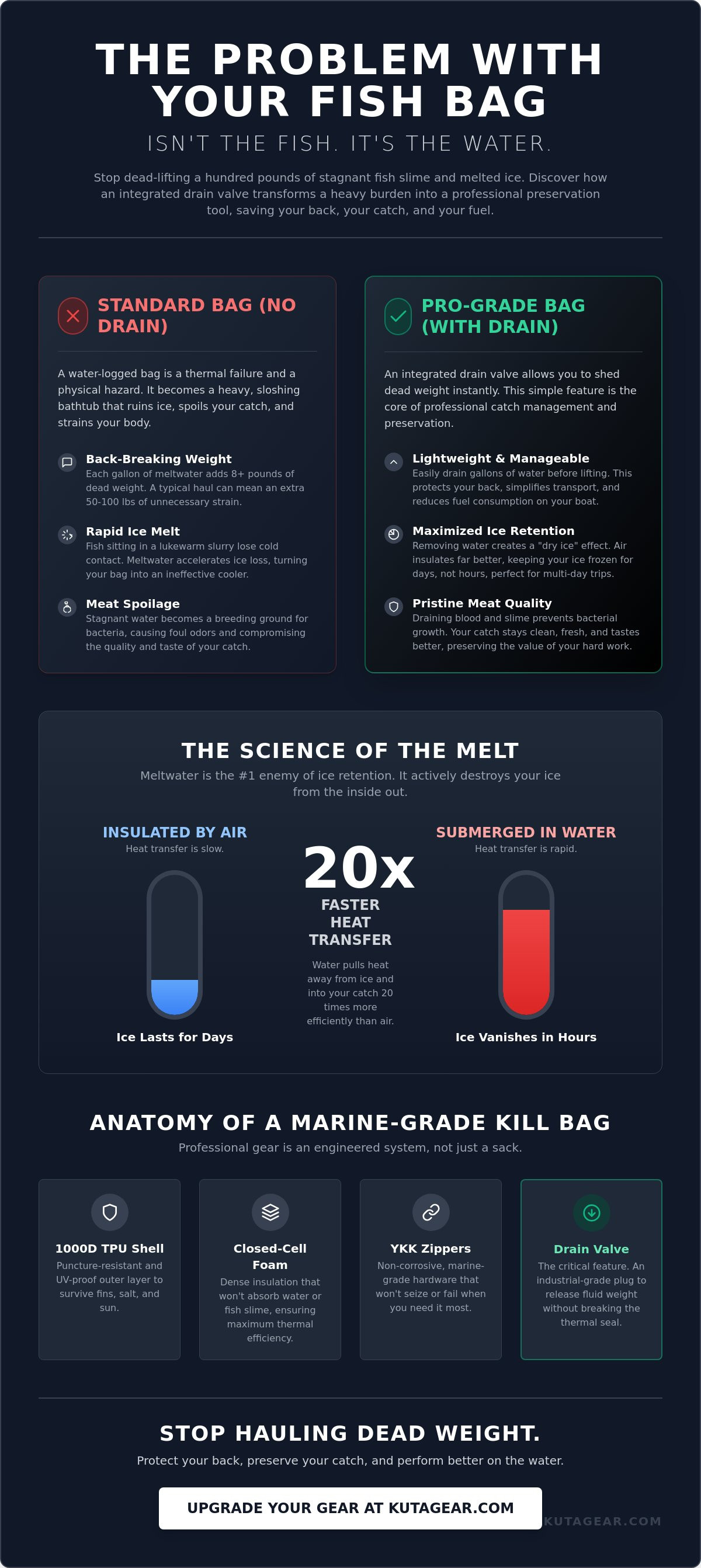
- Maximize ice retention during multi-day hauls by draining meltwater, which pulls heat away from your catch 20 times faster than air.
- Learn to spot the weak points in standard gear, from brittle gaskets to stripped threads, before they fail in the field.
What Defines Heavy Duty Fish Bag Construction?
A standard storage sack won't cut it when you're miles offshore. Professional heavy duty fish bag construction is about survival. Your gear faces a brutal environment. Puncturing fins, relentless UV exposure, and corrosive salt spray will destroy inferior materials in a single season. A real kill bag is a specialized tool. It's engineered to maintain internal temperatures while simplifying the management of a heavy catch. This is the mechanical bridge between a basic soft cooler and a professional meat preservation system. Understanding the specifics of heavy duty fish bag construction helps you avoid gear failure at the worst possible time.
The defining feature of a high-performance bag is its ability to manage fluids. Integrated drainage allows you to remove blood and meltwater without compromising the thermal seal. You need a bag that stays cold but stays light. If your bag doesn't have a dedicated release valve, it's just a heavy, leaking mess. It's about efficiency on the water and at the dock. You don't want to fight your gear when the bite is on.
The Anatomy of a Marine-Grade Kill Bag
The outer shell is your first line of defense. Professionals utilize 1000D materials and thick TPU coatings to ensure the bag remains watertight and puncture-resistant. These designs often incorporate high-strength heavy-duty plastic fibers similar to those found in industrial bulk containers. This level of durability is non-negotiable when dealing with the sharp spines of pelagic species. It's built to take a beating on the deck and in the truck bed.
- Insulation Core: Reliable bags use dense, closed-cell foam. Unlike open-cell alternatives, this material won't soak up fish slime or water. It keeps the heat out for days, not hours.
- Hardware: Look for non-corrosive YKK zippers and reinforced webbing. High-stress points like handles must be over-engineered. If a handle snaps while you're lifting a 100-pound bag, your haul is at risk.
Kill Bag vs. Rigid Cooler
Rigid coolers are bulky. They take up valuable deck real estate even when they're empty. Insulated bags offer space-saving flexibility. They fold flat when the hunt begins and expand as the fish pile up. For small-to-medium boaters, the weight-to-volume ratio is unbeatable. You get more storage capacity with less dead weight. The evolution of catch care has moved beyond basic ice chests. Modern anglers demand the portability and performance that only a dedicated fish bag can provide. It's the only way to protect your harvest and your fuel budget simultaneously.
Performance Benefits: Ice Retention and Weight Management
Heavy duty fish bag construction isn't just a material choice. It's a performance requirement. Water kills ice. It’s a simple fact. Meltwater transfers heat 20 times faster than air. If your catch sits in a lukewarm slurry, you’re losing the battle. You have to drain that fluid. It’s the only way to keep the fish on ice for the long haul. A water-logged bag isn't just heavy; it's a thermal failure. You need a system that prioritizes ice longevity over simple storage.
Consider the weight penalty. Every gallon of water adds about 8 pounds to your load. That’s dead weight. It drags on your hull. It burns extra fuel. It strains your back at the dock. Proper heavy duty fish bag construction ensures you can shed that weight instantly. You want to carry fish, not a bathtub. High-quality builds let you dump the liquid while keeping the prize cold. It makes the move from deck to truck bed a manageable task instead of a physical struggle. Shedding fluid weight is the difference between a smooth exit and a blown-out lower back.
Maximizing Ice Longevity with Drainage
Drainage creates what pros call a "dry ice" effect. By removing liquid contact, you keep your cubes intact longer. Air is a far better insulator than water. When you crack that plug, you reset the thermal clock. It’s the difference between a soggy mess and a professional-grade haul. For the best results, pack your ice strategically. Concentrate your cubes near the bottom corners. This ensures a clear path for meltwater to exit the release valve without getting trapped by the catch.
Deck Safety and Vessel Performance
A heavy, sloshing bag is a liability. On small boats, shifting weight impacts stability. It changes how your hull handles the chop and can even affect your plane. Draining the bag reduces the "slosh" factor. It keeps your center of gravity predictable and your deck dry. Nobody wants a slip-and-fall while hauling gear in high seas. A properly drained 36-inch bag stays where you put it. It sits flat. It doesn't slide. If you want a setup that respects your vessel's performance, an 18" x 36" insulated fish bag provides the necessary drainage to keep your deck safe and your boat efficient.
Think about the cleaning station. You're tired. The sun is down. The last thing you want is a 150-pound bag that's half-filled with fish slime. Shedding that weight before you lift is a game-changer. High-performance construction recognizes that the job isn't over until the fish are filleted and the bag is rinsed. It’s about preserving your energy as much as your catch. Don't fight the water. Drain it.
Sanitation and Meat Quality: Why Drainage is Essential
You didn't spend twelve hours on the water to bring home spoiled meat. Stagnant blood and slime are breeding grounds for bacteria. These pathogens don't just smell bad; they destroy the quality of your harvest. If you leave your fish submerged in a lukewarm, bloody slurry, you're essentially brining them in filth. Draining fluids is a sanitation requirement. It prevents "fishy" odors from permeating the bag’s inner liner. Professional heavy duty fish bag construction incorporates drainage for this exact reason. Rapid fluid removal is the primary mechanical factor that dictates meat shelf life by stripping away the bacterial medium necessary for spoilage.
Water ruins fillets. It's that simple. When fish sit in stagnant meltwater, the flesh becomes water-logged and the skin texture breaks down. You want your catch resting on ice, not swimming in a red soup. Continuous drainage ensures your fish are never submerged in a slurry that has reached ambient deck temperature. It keeps the environment inside the bag predictable and cold. It keeps your haul edible. Don't let a long day of fishing end with a wasted harvest because you couldn't shed the slime.
Preventing Cross-Contamination
A drain plug isn't just for the end of the trip. It allows for mid-trip rinsing. Open the plug. Flush the bag with fresh saltwater. This removes the initial layer of slime and blood from the first catch of the day. It’s critical for pelagic and oily species like tuna or mackerel. These fish are prone to histamine buildup if not handled correctly. By maintaining a cleaner, drier environment, you ensure that your tenth fish is just as fresh as your first. It creates a sterile-as-possible field in a naturally messy environment. You're running a professional operation. Your gear should reflect that.
The Science of Core Cooling
Ice-cold air is superior to stagnant meltwater for maintaining skin texture. When fish sit in water, the scales can soften and the flesh can become mushy. You want the "dry cold" provided by air circulating around solid ice cubes. There is a time for a slurry, however. If you need to drop the core temperature of a large fish rapidly, close the plug and create a saltwater slush. Once the core is chilled, open the valve. Let the liquid go.
- Clear meltwater: This is a sign of a well-maintained bag.
- Dark, opaque blood-water: Drain this immediately to prevent bacterial bloom.
- Solid ice cubes: If they are resting directly on the catch without a water layer, your drainage is working.
A properly maintained kill bag shows its value at the cleaning table. The fillets should be firm, the smell should be neutral, and the skin should be intact. If you're seeing floating fish, you've had a thermal failure. Use your drainage system to keep the environment tight. Speed matters. Sanitation matters more.
Durability Test: Why Most Drain Plugs Fail
Most drain plugs are an afterthought. In low-end gear, they are the first part to snap. You've seen it happen. Brittle plastics crack after two months in the sun. Cheap rubber gaskets dry out and crumble. Threads strip the moment you apply actual pressure. This isn't just a nuisance. It's a gear failure that ruins your truck bed and kills your ice retention. Professional heavy duty fish bag construction treats the drainage system as a primary structural component. It isn't an optional add-on.
You need a tethered cap. High-pressure cleaning at the dock or a bumpy ride in the back of a truck will vibrate loose parts right off the bag. If you lose that cap, the bag is useless. Look for industrial-grade plastic release valves. These are designed to withstand the weight of a full catch without popping out of the bag's housing. A high-quality seal feels substantial. It locks into place. If it feels flimsy in your hand, it will fail on the water. Don't settle for hardware that wasn't built for the salt.
Anglers often worry about leaks in their vehicles. It’s a valid concern. Nobody wants fifty gallons of fish blood in their carpet. However, a properly engineered plug is safer than a zipper-only bag. Zippers are notorious for leaking when the bag is compressed or shifted. A threaded, O-ring sealed plug is a mechanical lock. It’s built to hold. If you want gear that respects your vehicle, look for a heavy-duty insulated fish bag designed with a leak-proof drainage system.
Material Science of Marine Hardware
Reinforced housings are mandatory. The plug shouldn't just be glued in. It should be integrated into the liner through sonic welding or high-frequency bonding. This prevents the "pop-out" failure that occurs when a bag is lifted while full. O-rings must be made from salt-resistant elastomers. Heat and salt are a lethal combination for standard rubber. UV-stabilized materials are the industry standard for a reason. Without them, the plastic becomes a liability within a single season. High-performance heavy duty fish bag construction demands hardware that can survive the elements.
Maintenance for Leak Prevention
A seal is only as good as its threads. Sand, salt crystals, and fish scales are the enemies of a watertight close. Wipe the threads before you lock it down. It takes five seconds. Inspect your gaskets monthly. Look for small cracks or flattening. If the O-ring is compromised, replace it immediately. You can field-test your integrity at the dock. Fill the bag with a few gallons of water and check for drips before you load it into the truck. It’s about being prepared, not lucky. Real gear requires real maintenance.
The Kuta Gear 18x36 Advantage: Built for the Hunt
The 18" x 36" Insulated Fish Bag isn't for show. It's built for the hunt. We didn't design this for the casual hobbyist. We designed it for the serious angler who needs gear that works. Heavy duty fish bag construction is our baseline. We focus on the sweet spot. At 18" x 36", this bag handles the most common game fish without swallowing your deck space. It’s the right tool for the job. It fits. It stays cold. It drains. That’s the mission.
You need performance without the corporate markup. Most big-name brands charge you for their marketing budget. We don't. We sell direct to the consumer. This means you get industrial-grade insulation and a leak-proof drainage system at a fair price. Our gear is engineered for the rigors of the open ocean and the vibration of heavy truck transport. We prioritize reliability over prestige. If the gear can't handle the salt, it doesn't leave our shop.
Purpose-Built Utilitarian Design
The 18x36 size is the most versatile choice for the serious angler. It’s large enough for a solid haul of snapper, grouper, or mahi, yet compact enough to fold away when the deck gets crowded. We didn't waste time on flashy aesthetics or useless features. We focused on reinforced handles and zippers that complement the integrated drainage. This bag is designed to be handled while wet and heavy. It’s built to be used, not just owned.
- Versatility: Perfect for center consoles, kayaks, and truck beds.
- Durability: High-frequency welded seams that won't pull apart under load.
- Efficiency: Flat-bottom design that stays upright and drains completely.
The Kuta Gear Promise
We provide rugged gear for the hardworking fisherman who demands reliability. You shouldn't have to worry about your gear failing when the bite is on. We know the stakes. Our fulfillment is fast because we understand that every day without gear is a day missed on the water. We are a practical, resourceful partner for your offshore adventures. We disregard social status in favor of raw performance and value. Stop paying for the logo. Start paying for the construction.
Ready to upgrade your catch management? Don't settle for a bag that leaks or a zipper that corrodes. Get the gear that’s built for the environment you actually fish in. Get the Kuta Gear 18" x 36" Insulated Fish Bag here and see the difference that professional heavy duty fish bag construction makes on your next trip.
Secure Your Haul and Protect Your Vessel
Don't let a successful day on the water end with a heavy, smelly mess at the dock. You've learned that drainage is the mechanical bridge between a simple sack and a professional preservation tool. It’s about more than just shedding dead weight. It’s about preventing bacterial bloom and maximizing every pound of ice you carry. Professional heavy duty fish bag construction ensures your catch stays firm and your boat stays clean. You demand reliability from your hull and your tackle. Your storage gear should be no different. Performance matters most at the cleaning table.
Stop fighting water-logged gear and start focusing on the haul. Our rugged 18" x 36" construction is engineered for maximum ice retention and built for the toughest marine conditions. It’s rugged. It’s utilitarian. It’s ready for the open ocean. Upgrade your catch care with the Kuta Gear 18" x 36" Insulated Fish Bag. You've done the hard work of finding the fish. Now, use the right tool to bring them home in peak condition. Good luck on the next run.
Common Questions About Heavy Duty Fish Bag Construction
Does the drain plug make the fish bag leak in my vehicle?
A properly tightened threaded plug with a rubber O-ring will not leak in your vehicle. It creates a mechanical seal that is more reliable than a standard water-resistant zipper. You must ensure the threads are clear of debris like sand or scales before you lock it down. If the seal is clean and tight, your truck bed stays dry and odor-free during the drive home.
How often should I drain the bag during a fishing trip?
Drain the bag every few hours or immediately after adding a large, warm catch to the bag. Removing blood and slime as it accumulates prevents the internal temperature from rising. Frequent drainage is a core part of maintaining professional heavy duty fish bag construction performance. It keeps the environment inside the bag cold and prevents the "slurry" from becoming a bacterial breeding ground.
Can I replace the drain plug if it gets lost or damaged?
You can replace the drain plug if it becomes damaged or lost. Most high-performance bags use standard marine-grade threading for their release valves. We recommend choosing a bag with a tethered cap to prevent loss during high-pressure cleaning at the dock. Keeping a spare O-ring in your tackle box is a smart move for any serious angler who demands constant readiness from their gear.
Should I leave the drain plug open or closed while the bag is on the boat?
Keep the plug closed while the boat is in motion to prevent bloody water from sloshing onto your deck. Open it periodically when you are stationary or at the dock to shed meltwater and waste. This manages the weight of the bag and keeps your vessel's center of gravity stable. Always ensure the plug is locked and verified before you transition the bag from the deck to your vehicle.
Does a drain plug affect the ice retention time of the bag?
A drain plug improves ice retention by removing liquid water that transfers heat 20 times faster than air. By keeping the remaining ice "dry," you extend the life of your cubes for multi-day hauls. Draining the bag resets the thermal environment and protects your meat quality. This is why integrated drainage is a non-negotiable feature in professional heavy duty fish bag construction.
How do I clean the drain plug to prevent odors?
Clean the plug by flushing it with fresh water and a mild soap after every trip. Use a small brush to clear any scales or slime trapped in the threads or the O-ring groove. Leave the plug open while the bag air-dries to prevent mold growth in the housing. A clean valve is the best defense against lingering odors permeating the inner liner of your bag.
Is a threaded plug better than a push-in style plug?
Threaded plugs are superior to push-in styles because they won't pop out under the weight of a full catch. A threaded connection provides a mechanical lock that can withstand high internal pressure during transport. Push-in plugs rely on friction, which often fails as the material wears or gets lubricated by fish slime. For a bag you can trust in a truck bed, threads are the only choice.
Will the drain plug handle large scales or fish debris without clogging?
Industrial-sized release valves handle most scales and debris without issue. However, very large scales from specific game fish can occasionally block the flow if they settle directly over the opening. If drainage slows down, a quick rinse with a hose or a manual check usually clears the obstruction. High-performance bags utilize wide-diameter valves to minimize this risk and ensure rapid fluid removal.

Also in Contact

Portable Fish Storage for Pier Fishing: The Rugged Guide to Catch Preservation

The Best Way to Chill Fish Quickly After Catch: A Professional Guide
