

Food Grade Fish Bag Material: What Professional Anglers Need to Know for 2026
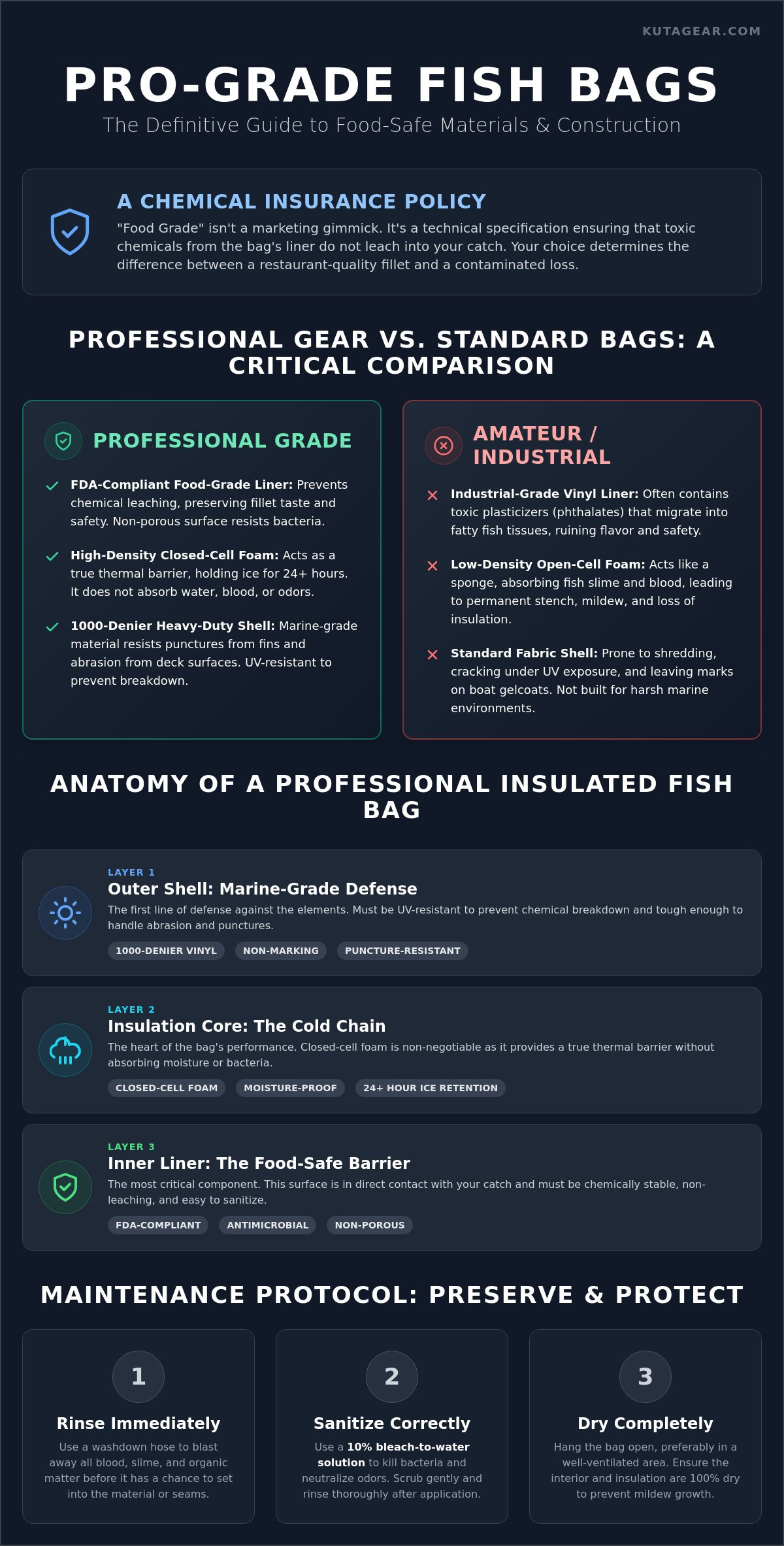
The label "food grade" on your gear isn't a marketing gimmick; it's a chemical insurance policy for your catch. Most anglers focus on insulation thickness or zipper strength while ignoring the reality that their liner might be leaching toxins into a high-value tuna. Choosing the right food grade fish bag material is the difference between a restaurant-quality fillet and a contaminated mess. It's about chemical stability under pressure. You don't want industrial chemicals migrating into your food just because the sun hit the deck.
You know the frustration of a bag that holds onto a permanent stench or a liner that peels after one season of heavy use. It's an expensive failure that ruins good meat and wastes your time. This guide breaks down the technical requirements of professional-grade liners and why specific materials are non-negotiable for 2026. We will look at the critical differences between cheap industrial vinyl and true food-safe barriers. You'll learn how to identify materials that resist cracking and won't absorb bacteria. Gain the confidence to know your catch remains pristine from the boat to the dinner table.
Key Takeaways
- Learn why professional food grade fish bag material is mandatory for preventing chemical migration and maintaining FDA compliance for raw protein.
- Identify the technical specs of a professional bag, including UV-resistant shells and closed-cell insulation that won't absorb water.
- Recognize how cheap liners leach toxins when exposed to heat and ruin the flavor of high-value tuna.
- Use the 10% bleach protocol and specific drying techniques to eliminate odors and prevent mildew growth in the insulation layer.
- See how specialized 18" x 36" dimensions and industrial-grade construction provide a competitive edge for serious anglers.
What Defines Food Grade Fish Bag Material?
Food grade is a technical specification. It isn't a suggestion. It describes materials that are chemically inert and stable under extreme stress. These surfaces won't leach toxins when they touch raw protein or acidic liquids. For a professional angler, your Food contact materials must withstand harsh marine conditions. High heat. Constant UV exposure. Direct contact with blood and corrosive fish oils. If the material breaks down, those chemicals end up in your fillets. That is a failure you can't afford.
Professional food grade fish bag material is designed to be non-leaching. It maintains its molecular structure even when the deck temperature spikes. It prevents bacteria from colonizing the seams and resists the corrosive nature of fish waste. This isn't just about basic hygiene. It's about preserving the market value of your catch. If your liner absorbs oils, it becomes a breeding ground for pathogens. Professional liners must stand up to:
- Concentrated fish oils that dissolve cheap, low-grade plastics.
- Acidic blood that causes deep staining and permanent odors.
- Saltwater corrosion that weakens seam integrity over time.
- UV radiation that triggers chemical breakdown in standard vinyl.
FDA Compliance vs. Industrial Grade
Don't confuse "industrial strength" with "food safe." A truck tarp is durable, but it's often loaded with toxic plasticizers like phthalates. These chemicals migrate easily into fatty fish tissues like tuna or snapper. Marine storage requires a much higher standard. You need a liner that meets specific FDA requirements for direct contact with raw protein. Food-grade material is a non-porous barrier against bacterial growth. Industrial vinyl often contains recycled content or heavy metals that have no place near your dinner. If a manufacturer won't specify their liner material, it's likely industrial-grade vinyl repurposed for a cheap bag.
Non-Porous Surfaces and Hygiene
Porous surfaces are the enemy of a clean boat. They trap fish slime and microscopic organic matter. Once that debris gets into the grain of the material, the smell becomes a permanent fixture. You can't scrub it out. Professional bags, like the standard 18" x 36" insulated models, utilize smooth, specialized coatings over heavy-duty vinyl bases. These surfaces allow for rapid sanitation and total rinsing. You want a liner that sheds blood and slime with a simple blast from the washdown hose. If the surface feels textured or rubbery, it's a trap for bacteria. High-quality food grade fish bag material stays slick. It makes post-trip cleanup fast and effective. This ensures your gear is ready for the next run without carrying the stench of the last one. Reliability starts with the surface.
The Anatomy of a Professional Insulated Fish Bag
A professional bag is an engineered system. It isn't just about thickness. It's about how three distinct layers work together to protect your investment. The outer shell fights the environment. The core fights the heat. The liner fights the bacteria. If one layer fails, the whole system collapses. You need gear that handles the abuse of a commercial deck without compromising the safety of the meat inside.
Outer Shell: Marine-Grade Durability
Your bag lives on a salt-soaked deck. It faces constant UV rot and abrasive surfaces. Standard fabrics shred under these conditions. Professional bags use 1000-denier heavy-duty vinyl. This material is the industry benchmark for puncture resistance. It handles the sharp fins of a snapper or the rough skin of a shark without blinking. You also need non-marking materials. A bag that leaves black streaks on your gelcoat is a liability, not an asset. Durability means nothing if it destroys your boat in the process.
Closed-Cell Insulation: The Cold Chain
The core is where the cold stays. Cheap bags use open-cell foam. Open-cell foam acts like a sponge. It absorbs water, fish slime, and blood. Once it gets wet, it loses its thermal properties and starts to rot from the inside. You can't wash that smell out. Professional gear utilizes high-density, closed-cell insulation. This material is moisture-resistant. It creates a legitimate thermal barrier that holds ice for 24 hours or more, even in direct summer sun. It keeps the core temperature stable so the fish stays firm and fresh.
The inner liner is the most critical component. This is the food grade fish bag material that actually touches your meat. It must pass the FDA's rigorous scientific safety assessment to ensure no toxic transfer occurs. Unlike standard plastics, these liners often feature antimicrobial properties. They actively prevent bacteria from colonizing the surface during long hauls. This is a massive gap in most consumer-grade gear. If your liner doesn't actively resist microbial growth, you're just carrying a petri dish.
Seams are the final piece of the puzzle. Never trust a stitched liner. Every needle hole is a gateway for bacteria and fluids to enter the insulation core. Professional bags use heat-welded seams. This process fuses the food grade fish bag material into a single, unbreakable bond. It's leak-proof. It's permanent. It's easy to sanitize. If you want a bag that actually performs, look at the 18" x 36" insulated fish bag designed for these exact specifications. It is built for the professional who values catch quality over marketing hype.
Why Non-Food Grade Liners Ruin Your Catch
Waterproof is the bare minimum. It does not mean safe. Using a pond liner, a generic tarp, or a hardware store bag to store fish is a professional mistake. These materials are chemically unstable. They are designed for industrial utility; not for direct contact with raw protein. When you put a prize catch into a low-quality bag, you are risking the integrity of the meat. It is a gamble that usually ends with ruined flavor and potential health risks.
Heat is the primary catalyst for failure. When a bag sits on a sun-drenched deck, internal temperatures climb. This thermal stress triggers chemical migration in non-certified plastics. Toxins move from the liner directly into the fish. You end up with tuna fillets that carry a distinct, metallic "plastic taste." This isn't just an off-flavor. It is the literal taste of material degradation. High-quality food grade fish bag material is engineered to remain stable at these temperature spikes. It ensures that the only thing your fish absorbs is the cold from the ice.
Structural failure is another hidden danger. Cheap liners aren't built for extreme thermal shock. Moving a bag from a 32-degree ice slurry to a 100-degree deck causes brittle, industrial plastics to develop micro-cracks and pinholes. These aren't always visible to the eye. However, they become permanent bacterial traps. They collect old blood, slime, and scales that no amount of scrubbing can reach. Professional-grade food grade fish bag material remains flexible across these temperature swings, preventing the cracks that harbor rot.
The Risk of Phthalates and BPA
Industrial vinyl relies on plasticizers like phthalates to stay flexible. These chemicals are not bonded to the plastic. They leach out easily. Acidic fish blood and the high oil content of species like mackerel or snapper accelerate this breakdown. This chemical transfer is a direct violation of the safety standards outlined in the FDA's HACCP regulations for fish. These regulations exist to prevent contamination during storage and transport. If your liner isn't food-grade, you are feeding your family meat that has been marinating in industrial additives.
Odor Retention and "The Funk"
Some bags develop a permanent stench that never goes away. This is "The Funk." It happens because industrial materials are often porous at a microscopic level. They absorb organic matter. Once fish slime gets into the grain of the material, it becomes a breeding ground for mold and bacteria. Food-grade liners feature a high-density, ultra-smooth surface. They are designed to shed waste. A simple freshwater rinse is often enough to remove all traces of a trip. Professional materials refuse to bond with organic waste, ensuring your gear stays as clean as the day you bought it.
Maintenance: Keeping Food-Grade Materials Safe
A professional bag is an investment. If you don't maintain the liner, you're throwing money away. Sanitation is about more than just a quick rinse with a hose. You need to protect the integrity of the food grade fish bag material to ensure it remains a sterile barrier. Neglect leads to bacterial colonization. It leads to permanent odors. It leads to gear failure when you're miles offshore and the bite is on. Proper care is a technical requirement, not a suggestion.
Post-trip sanitation requires a 10% bleach solution. This is the industry standard for killing resilient pathogens without melting the specialized coatings of the inner liner. Spray the interior. Let it sit for ten minutes. Rinse it thoroughly with fresh water. This process removes the microscopic organic matter that standard dish soap misses. It keeps the surface chemically stable and ready for the next catch. If you skip this step, you're just marinating your next tuna in the bacteria of the last one.
Sanitization Without Degradation
Choose your tools carefully. Never use abrasive brushes or steel wool on the interior. These create micro-scratches in the liner. These scratches are perfect hideouts for bacteria. They make future cleaning impossible. Use a soft cloth or a sponge. Focus on the zipper track. Salt crystals act like sandpaper on the teeth and the surrounding fabric. A clean zipper is a functional zipper. If it jams, the bag is useless. Avoid harsh industrial solvents that can strip the antimicrobial properties from the surface. Stick to mild detergents and bleach dilutions.
Long-Term Storage Tips
Never store a closed bag. Trapped moisture is an invitation for mildew and mold growth. Even with high-density insulation, a sealed, damp environment will eventually rot the seams from the inside out. Prop the bag open. Let it air dry completely in a shaded area. UV coatings are durable, but constant direct sunlight during storage is unnecessary wear. Keep it in a cool, dry place. Professional gear, like the 18" x 36" insulated fish bag, is built for year-round readiness. It handles the crease points of foldable designs without cracking the food grade fish bag material. Check the liner for punctures before every run. A small tear in the food-safe barrier compromises the entire cold chain. Maintain the gear, and the gear will maintain your catch.
Kuta Gear: Rugged Utility Meets Food Safety
Kuta Gear doesn't sell status. We sell reliability. Our equipment is designed for the angler who treats the ocean like an office. We don't build for the weekend hobbyist who stays in the protected bay. We build for the Pacific. The salt. The sun. The blood. Our 18" x 36" insulated fish bag is the result of field testing in environments where gear actually fails. We chose a specific food grade fish bag material that doesn't just meet the baseline; it exceeds it. Most corporate brands charge for the logo. We charge for the construction. Performance is the only metric that matters on the water.
Reliability is earned through intentional design. We focus on industrial-strength materials that handle the physical rigors of a commercial deck. This means thicker shells, better insulation, and liners that won't compromise your catch. You need gear that stays ready. You need a bag that handles a 50-pound snapper without stretching or tearing. We provide that utility without the traditional marketing hyperbole. It's gear built by insiders for insiders.
Engineered for Performance
Size matters for deck efficiency. We focus on a perfected 18" x 36" footprint because it is the sweet spot for professional catch preservation. It fits the deck without killing your floor space. It holds the ice. It holds the meat. We utilize 1000-denier vinyl because anything less is a toy. Our insulation is high-density closed-cell foam. It won't sponge up slime. It won't fail when the mercury hits triple digits. This is the food grade fish bag material you need when the stakes are high and the run back to the dock is long. We offer direct-to-angler value. No retail markups. No middleman bloat. Just better gear delivered at a competitive price point.
Ready for Your Next Catch
Expensive gear doesn't catch more fish. It just drains your wallet. We systematically dismantled the myth that high price equals high performance. Kuta Gear competes with corporate giants on technical specs, not on prestige. Heat-welded seams. UV-resistant shells. Non-leaching liners. These are standard features for us, not premium upgrades. We act as a resourceful partner for the serious angler. We understand the specific needs of the field. We know the frustration of overpaying for logistical failures and high retail margins. If you want a bag that shows up and does the job every single trip, look at our specs. Stop paying for the corporate tax and start investing in your catch quality. Get the 18" x 36" Insulated Fish Bag Built for Pros and see the difference that rugged utility makes.
Secure Your Catch for the Long Haul
Catch quality is non-negotiable. You've seen why cheap liners fail. They leach toxins when the heat rises. They harbor bacteria in micro-cracks. They ruin the flavor of a high-stakes tuna with a metallic plastic taste. Professional food grade fish bag material is the only barrier that matters between your fillets and a scorching deck. It's about chemical stability and physical grit. It's about knowing your family is eating clean meat.
We built our gear to handle the brutal reality of the water. Our equipment is tested in Hawaii marine conditions to ensure it never flinches. We use industrial-strength 1000D materials and heavy-duty food-grade liners. This isn't about luxury. It's about reliability. Don't let corporate markups or inferior plastics dictate the safety of your catch. You need a bag that maintains the cold chain from the first strike to the final fillet.
Ready to upgrade your deck with gear that actually performs? Shop the Kuta Gear 18" x 36" Insulated Fish Bag and lock in your catch quality for 2026. Keep your ice cold and your reputation clean. Get back out there.
Frequently Asked Questions
Is PVC food grade for fish storage?
Not all PVC is food grade. Standard industrial PVC often contains toxic plasticizers and heavy metals that leach into fish meat when temperatures rise. Only PVC specifically formulated and certified for direct food contact is safe for your catch. If the manufacturer doesn't explicitly state the material is food-grade, assume it is industrial. Using non-certified PVC risks chemical migration that ruins the safety and flavor of your fillets.
What is the best material for a fish kill bag liner?
The best material is a high-density, reinforced food-grade vinyl with heat-welded seams. This food grade fish bag material must be non-porous and chemically stable to prevent bacteria from taking hold. Smooth surfaces are superior because they shed blood and slime instantly during a rinse. This ensures a sterile environment for your catch while providing the puncture resistance needed for sharp fins and abrasive scales.
Can I use a regular dry bag for fish storage?
No, you shouldn't use a standard dry bag for fish storage. Dry bags lack the closed-cell insulation required to maintain a cold chain in the sun. Most are made from industrial plastics that aren't certified for food contact. They will leach chemicals into your fish and absorb permanent odors. Without heat-welded, food-safe liners, you're just creating a breeding ground for bacteria that will rot your catch before you hit the dock.
How do I know if my fish bag is FDA compliant?
Check the technical specifications provided by the manufacturer for explicit mentions of FDA-approved liners. True compliance means the food grade fish bag material has passed testing for chemical migration and safety. If the product description focuses only on "heavy-duty" without mentioning food safety, it is likely industrial grade. Professional brands prioritize this transparency to ensure your catch stays restaurant-quality and safe for your family to eat.
Why does my fish bag still smell after washing?
Lingering smells mean the liner is porous or the insulation has absorbed organic fluids. If fish slime or blood enters the grain of a low-quality material, standard rinsing won't remove it. This is why non-food-grade liners are a liability. They trap organic matter that rots over time. If your bag uses open-cell foam, any puncture in the liner allows bacteria to colonize the core, creating a permanent stench that cannot be scrubbed out.
What is the difference between closed-cell and open-cell foam?
Closed-cell foam is a moisture-resistant barrier that does not absorb liquids. It is the industry standard for professional gear because it maintains its thermal properties even when wet. Open-cell foam is like a sponge. It absorbs water, blood, and bacteria. Once saturated, open-cell foam loses its ability to insulate and becomes a source of rot. Always choose high-density, closed-cell insulation for reliable temperature retention and hygiene on the water.
How long will food-grade material last in direct sunlight?
Quality food-grade liners last several seasons if they feature UV-resistant coatings. Direct sunlight is the primary cause of material breakdown and chemical leaching in cheap plastics. Professional bags use heavy-duty vinyl treated to withstand the harsh UV radiation found in marine environments. While the material is durable, you should still store the bag in a cool, dry place when not in use. This preserves the molecular integrity of the liner for years.
Does the thickness of the liner affect ice retention?
Liner thickness primarily dictates puncture resistance and durability, not ice retention. The insulation core is what maintains the internal temperature. A thick liner is important for handling sharp fins and spines without developing leaks, but it won't keep your ice from melting. You need a system that combines a heavy-duty, food-safe liner with high-density, closed-cell foam to ensure your catch stays cold and uncontaminated during long runs back to the harbor.
Also in Contact

Portable Fish Storage for Pier Fishing: The Rugged Guide to Catch Preservation

The Best Way to Chill Fish Quickly After Catch: A Professional Guide
