

Reducing Fish Waste Through Proper Storage: The Angler’s Guide to Catch Preservation
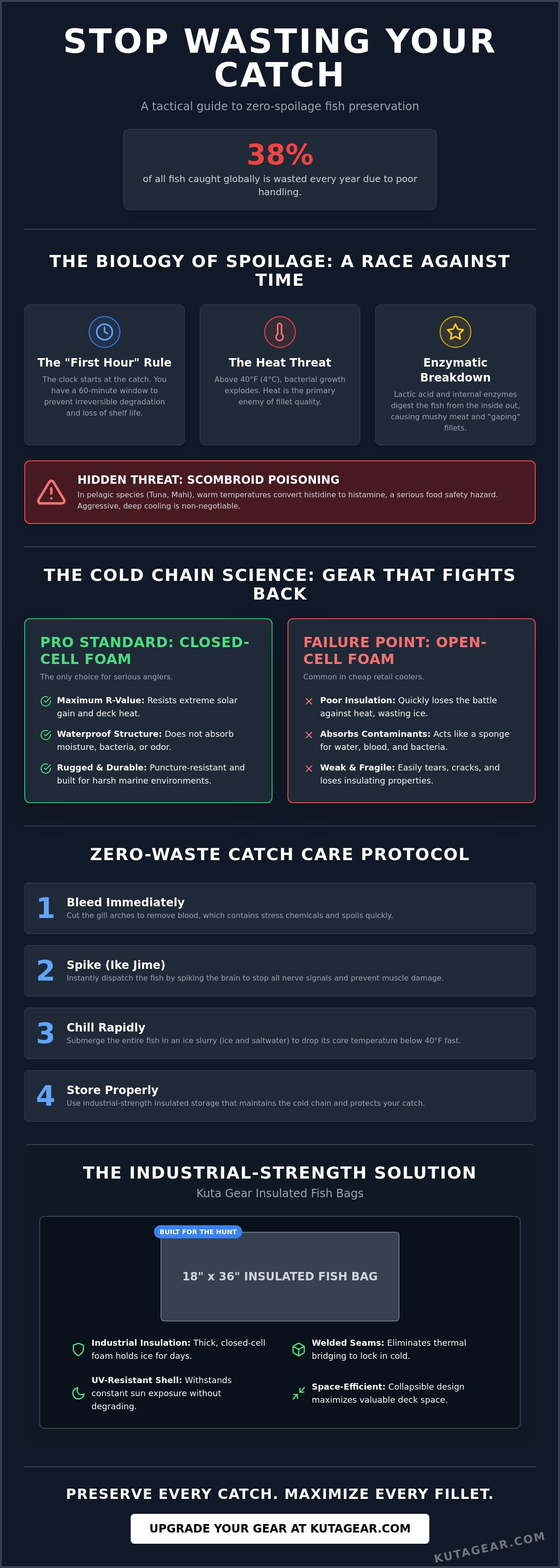
Nearly 38% of all fish caught globally is wasted every year. That is millions of tonnes of protein left to rot because of poor handling. You spend your weekends chasing a trophy and your hard-earned money on fuel. Pulling a mushy, grey fillet out of a lukewarm cooler at the end of the day is a gut punch. It is a waste of time and a waste of life. You want restaurant-quality meat, not a bag of fertilizer. We agree that every fish kept should be a fish eaten.
This guide is your tactical blueprint for reducing fish waste through proper storage. You will learn the professional-grade storage techniques and gear requirements to eliminate meat spoilage and maximize the quality of every catch. We are stripping away the marketing fluff to focus on what actually works on the water. We will break down the industrial-strength insulation needed to hold ice in the summer heat and show you how to maximize your deck space with specialized gear like the 18" x 36" Insulated Fish Bag. Stop wasting your catch. Start preserving it.
Key Takeaways
- Identify the biological triggers that turn firm meat into mush within hours of the catch.
- Calculate the thermal resistance needed to beat the sun and maintain a stable cold chain all day.
- Evaluate why collapsible storage offers better drainage control and space efficiency than standard rigid coolers.
- Learn the Ike Jime method and immediate bleeding techniques to stop stress chemicals from destroying fillet quality.
- Discover why the 18" x 36" Insulated Fish Bag is the industrial-strength solution for reducing fish waste through proper storage.
The Biology of Spoilage: Why Proper Storage is Non-Negotiable
The clock starts the moment the line goes tight. Death triggers a chemical cascade. If you aren't ready, you're losing meat. Reducing fish waste through proper storage isn't just about having ice; it's about managing chemistry. Spoilage begins at the cellular level. Understanding the biology of fish spoilage is the difference between a prime fillet and a mushy mess. You are fighting a war against heat and time. Most anglers lose because they don't respect the process. They treat the cooler like an afterthought. That's a mistake.
Bacteria love heat. Marine environments are active breeding grounds. Once the fish's core temperature climbs above 40°F, bacterial proliferation rates explode. You have a one-hour window to secure the quality. This is the "First Hour" rule. Miss it, and the degradation is irreversible. A fish left on a hot deck for sixty minutes loses days of shelf life. It's a simple fact. Cold kills the clock. Heat kills the harvest. If you want restaurant-grade results, you have to act with urgency.
Enzymatic Breakdown and Lactic Acid
The struggle for life burns energy. Anaerobic metabolism kicks in immediately post-catch. This process floods the muscle with lactic acid and lowers the pH levels. High acidity and high heat activate internal enzymes. These enzymes don't wait for bacteria. They digest the fish from the inside out. You see the result in the cooler. Soft meat. Opaque color. Zero texture. This isn't bad luck; it's poor management. Gaping is the physical separation of muscle fibers due to temperature abuse. When the connective tissue fails, the fillet falls apart. It's a sign of a failed cold chain. You can't fix it later. You have to prevent it now.
The Role of Histamines in Pelagic Fish
Pelagic species carry a hidden threat. Tuna, Mahi, and Mackerel families are high-risk targets. These fish contain high levels of histidine. When the core stays warm, bacteria convert that histidine into histamine. This leads to Scombroid poisoning. It's a serious food safety hazard that causes hives, headaches, and respiratory distress. Surface cooling is a failure for these species. Deep-bodied fish hold immense heat in the core. You need aggressive cooling to reach the center of the meat. Reducing fish waste through proper storage means ensuring every inch of the fish is below the danger zone. Storage temperature isn't a suggestion; it's a safety requirement for your crew and your family. Don't gamble with their health. Use gear that holds the cold and stays ready for the hunt.
The Cold Chain Science: Insulation Materials and Ice Retention
The sun is your enemy. On a July afternoon, deck temperatures can hit 120°F. Your catch doesn't stand a chance without industrial-grade thermal resistance. Reducing fish waste through proper storage requires more than just a bag of ice. It requires science. It requires gear that fights back against solar gain. Most retail coolers use cheap open-cell foam. It's soft. It's weak. It absorbs water and bacteria like a sponge. You need better. You need insulation that doesn't quit when the heat peaks.
R-value measures thermal resistance. In marine environments, you want the highest R-value possible. High resistance means heat stays out. Cold stays in. This isn't just about ice retention; it's about food safety. An angler's guide to fish handling proves that consistent temperature is the only way to prevent spoilage. UV resistance is equally critical. Cheap materials degrade under constant sun exposure. They crack. They lose their insulating properties. Buy gear built for the environment, not the price tag. Reliability is the only metric that matters on the water.
Thermal bridging is the silent killer of ice. It happens at the seams. It happens at the zippers. Every point of contact is a potential leak. If your gear isn't sealed, you're just cooling the ocean. You need welded seams and heavy-duty closures to lock the microclimate in place. Reducing fish waste through proper storage means closing every gap where heat can enter. Don't let a cheap zipper ruin a hundred pounds of meat.
Closed-Cell Foam: The Industry Standard
Closed-cell foam is the professional benchmark. Its structure is dense. It doesn't absorb moisture. It doesn't harbor the foul smells of old fish. Thick foam directly correlates to ice longevity. You need that density to protect against heavy, sharp-finned species like grouper or snapper. A puncture in open-cell foam ruins the bag. A puncture in closed-cell foam is just a scratch. It keeps working. It keeps protecting your investment. It's built for the hunt, not the picnic.
Managing the Internal Microclimate
Air is the enemy of cold. A half-empty bag has too much air. Air pockets accelerate ice melt. Fill the space. Use more ice or smaller storage. Reflective outer layers are your first line of defense. They reject solar heat before it even reaches the insulation. The cold chain is the uninterrupted temperature control from deck to dinner table. If you break that chain, you waste the catch. Investing in industrial-strength fish bags ensures that chain stays solid from the moment you gaff the fish until it hits the pan.
Kill Bags vs. Rigid Coolers: Which Reduces More Waste?
The choice between a rigid cooler and an insulated kill bag isn't about preference. It's about performance and deck management. Rigid coolers are bulky. They take up permanent space whether they are full or empty. On a small craft, a large cooler is a tripping hazard. It leads to "crowded deck" accidents that ruin gear and risk safety. Reducing fish waste through proper storage starts with choosing gear that fits the mission. For most anglers, a collapsible bag is the superior tool. It offers a better size-to-weight ratio and adapts to the catch, not the other way around.
Drainage is the next battleground. Rigid coolers often trap melted ice at the bottom. This creates a "fish soup" of blood, slime, and meltwater. This mixture is a breeding ground for bacteria. Standing water accelerates spoilage and taints the flavor of the fillets. Proper care requires constant drainage. According to Penn State's guide to fish handling, keeping the catch out of contaminated water is vital for food safety. Kill bags allow for more efficient drainage control. You can hang them or position them to let gravity work for you. Don't let your dinner sit in a biohazard.
Cost-per-quart analysis favors the bag for high-capacity needs. Storing a 30 pound kingfish in a rigid cooler requires a massive, expensive box. That same fish fits easily into a streamlined bag. You get more storage volume for less weight and a lower price point. It's a utilitarian choice for the serious hunter. If you're a solo angler, the portability of a bag is a game changer. You can carry it from the boat to the truck with one hand. Efficiency saves time. Time saves meat.
The Flexibility Advantage
Bags conform. Rigid boxes don't. When you place a large fish in an insulated bag, the material wraps around the body. This eliminates the large air gaps that plague rigid coolers. Less air means slower ice melt. It's a tighter, colder environment. When the hunt is over, the bag collapses. You can tuck it away in a hatch or under a seat. It doesn't stay in the way. It stays ready. It's the most resourceful way to manage your deck space without sacrificing insulation quality.
Thermal Efficiency in High Heat
Premium bags rival rotomolded coolers for ice retention. The secret is the seal. High-quality bags use heavy-duty, leak-proof zippers. These zippers prevent thermal bridging. They lock the cold inside. At Kuta Gear, we focus on an 18" x 36" footprint. This size is engineered for optimal utility. It's large enough for a limit of snapper but small enough to handle alone. Reducing fish waste through proper storage means having the right size bag for the job. Too big is a waste of ice. Too small is a waste of fish. This footprint hits the sweet spot for the modern angler.
Practical Step-by-Step for Zero-Waste Catch Care
Catching the fish is the easy part. Keeping it perfect is the job. Zero-waste catch care is a disciplined system. It requires speed and the right tools. You can't wait until you're back at the dock to start the preservation process. You must act while the fish is still green. Reducing fish waste through proper storage begins with immediate dispatch and temperature control. If you're lazy on the deck, you'll pay for it at the table. Firm fillets aren't an accident; they're the result of a process.
Start with Ike Jime. Spike the brain to stop all neural activity. This prevents the fish from thrashing and burning through its energy stores. When a fish fights on the deck, it produces stress chemicals and lactic acid. These destroy the texture of the meat. After the spike, bleed the fish immediately. Cut the gill arches and let the blood drain. Blood carries heat and bacteria. It's the primary cause of "fishy" off-flavors. Clear the blood to clear the taste. It's a simple step that separates amateurs from pros.
The Perfect Brine Slurry
Ice alone is a poor conductor. Air pockets around the ice act as insulators and slow the cooling process. You need a slurry. Mix two parts ice with one part clean salt water. This liquid mixture has maximum thermal conductivity. It surrounds the fish and pulls heat from the core instantly. It's the fastest way to drop the temperature to 32°F. Ensure your bag is zipped tight to maintain this internal microclimate. If you want the best results, invest in the 18" x 36" Insulated Fish Bag to hold that slurry all day long.
Layering is your next tactical move. Don't just pile fish in a heap. Put a base layer of ice down first. Place the bled fish on top. Cover them completely with more ice or slurry. If you're stacking multiple fish, ensure there's cold material between every layer. Contact is key. Any part of the fish touching another fish instead of ice is a hot spot. Hot spots lead to spoilage. Use the 18" x 36" footprint to stack fish flat and maximize contact with the cooling agent.
Post-Trip Maintenance
The hunt ends at the wash-down station. Salt and slime are destructive. They eat zippers and breed mold. Clean your gear with mild soap and fresh water after every trip. Scrub the interior thoroughly. Pay attention to the seams. Salt buildup will seize a zipper faster than you think. Dry the bag completely before storing it. Never store it wet or crushed. Maintain the loft of the insulation to ensure it's ready for the next run. Proper maintenance is part of reducing fish waste through proper storage. It ensures your gear performs when the stakes are high.
Kuta Gear: Rugged Storage Built for the Hunt
The hunt is a grind. It is relentless. Your gear should be too. You don't need a status symbol on your deck. You need a tool that survives the environment. The 18" x 36" Insulated Fish Bag is that tool. We engineered it for the most demanding conditions. It doesn't care about aesthetics. It cares about performance. Reducing fish waste through proper storage is a logistical challenge that requires industrial-strength solutions. We provide them. No fluff. No hype. Just a bag that holds the cold when the sun is trying to cook your harvest.
We use materials that defy the elements. The outer shell is built to resist punctures from sharp fins and gaffs. It handles UV damage without cracking. Cheap bags fail because they use thin materials that degrade in the salt. We don't. We use high-density insulation that maintains its loft and thermal resistance. Welded seams prevent leaks. Heavy-duty zippers stay functional in the spray. This is gear built for the hunter who works as hard as the fish fights. It is a professional-grade barrier between your catch and the heat.
Gear failure is a choice. If you buy cheap, you choose to risk your meat. We believe that every fish kept should be a fish eaten. Our mission is reducing fish waste through proper storage by providing gear that actually works. We strip away the corporate markup and the traditional retail margins. You pay for the material. You pay for the engineering. You don't pay for a massive marketing budget. It's a direct-to-angler value that puts performance first.
Why Our 18" x 36" Dimensions Matter
Size dictates utility. A bag that is too large is a waste of ice. A bag that is too small is a waste of time. The 18" x 36" footprint is the "Goldilocks" size for the modern angler. It's versatile across species. It fits a limit of snapper or a solid mahi with ease. This dimension fits in truck beds without sliding. It sits on boat decks without blocking the path. It slides into storage lockers when the hunt is over. We optimized this size for ice retention and manageable weight. It's large enough for the catch but small enough to handle alone.
The Kuta Gear Philosophy
We are experts who understand the field. We've seen the logistical failures of larger corporate competitors. We've seen zippers seize and seams leak. We fixed those problems. Our philosophy is simple: reliability over aesthetics. We build gear that works as hard as you do. We are a practical, resourceful partner for your time on the water. We disregard social status in favor of performance and value. Stop wasting your catch. Get the Kuta Gear 18" x 36" Insulated Fish Bag today. Secure your harvest. Protect your investment. Stay ready for the next run.
Secure Your Harvest with Industrial-Strength Storage
Freshness is a battle won or lost in the first hour on deck. You've learned that the biology of spoilage doesn't wait for you to reach the dock. Reducing fish waste through proper storage is the mark of a professional. It requires a disciplined process. Spike the brain. Bleed the gills. Use a slurry. These are the tactical steps that separate a prime fillet from a mushy mess. You don't leave your hard-earned harvest to chance. You use the right tools for the job.
Generic gear fails when the sun peaks. You need an industrial-strength barrier against the heat. Our rugged 18" x 36" design is built for maximum utility on any deck. It is engineered for extreme ice retention and trusted by professional anglers nationwide. We've stripped away the retail margins to give you performance that works as hard as you do. Don't settle for less when your catch is on the line.
Upgrade to the 18" x 36" Insulated Fish Bag today. Secure every ounce of protein you pull over the gunwale. The hunt is on. Stay ready.
Frequently Asked Questions
How long can fish stay fresh in an insulated bag?
Fish stay restaurant-quality for 24 to 48 hours in a premium bag if you maintain the cold chain. This assumes you use a proper ice-to-fish ratio and keep the bag zipped tight. Reducing fish waste through proper storage means monitoring your ice levels throughout the trip. If the ice melts, the clock starts ticking. Keep the bag in the shade to extend your window.
Is a fish kill bag better than a plastic cooler?
A kill bag is superior for deck management and thermal efficiency. It conforms to the fish's body to eliminate air pockets that melt ice. Plastic coolers are bulky, rigid, and often trap bacteria-laden "fish soup" at the bottom. Bags offer better drainage and take up zero space when empty. They are the utilitarian choice for small-craft and solo anglers.
How much ice do I need for a 36-inch fish bag?
Use a 1:1 or 2:1 ratio of ice to fish for maximum protection. For a 36-inch bag, start with at least 20 to 40 pounds of ice depending on your target species and the outside temperature. More ice is always better than not enough. It is the only way to ensure the core temperature drops fast enough to stop spoilage.
Can I use dry ice in my Kuta Gear bag?
Don't use dry ice in your 18" x 36" Insulated Fish Bag. The extreme temperature of dry ice can make the inner liner brittle and cause it to crack over time. Stick to a heavy brine slurry or crushed ice. These materials provide better thermal conductivity for cooling meat without damaging the industrial-strength construction of the bag.
What is the best way to clean a fish bag to prevent smells?
Scrub the interior with mild soap and fresh water immediately after every trip. Focus on the seams and corners where slime hides and bacteria breed. Open the bag completely and let it air dry in the shade. Never store a damp bag in a closed hatch. Proper sanitation is a critical part of reducing fish waste through proper storage.
Do insulated fish bags leak?
High-quality bags don't leak if they have welded seams and heavy-duty zippers. Cheaper retail bags often fail at the stitching, leading to bloody water on your deck or in your truck. Our gear is built with industrial-strength seals to keep the brine slurry inside. Check your zippers for salt buildup regularly to ensure the seal stays tight and leak-proof.
What is the "Ike Jime" method and does it really help?
Ike Jime is the professional method of spiking the brain to stop neural activity instantly. It prevents the production of lactic acid and stress chemicals that destroy meat texture. It is the most effective way to guarantee firm fillets. It works, and it is a requirement for any angler who prioritizes meat quality over simple convenience.
How do I prevent my fish from getting "mushy" in the heat?
Drop the core temperature immediately to stop enzymatic breakdown. Use a brine slurry to surround the fish and pull out the heat. If you leave a fish on a hot deck for even thirty minutes, the meat begins to soften. Act fast. Use high-density insulation to win the battle against the sun and preserve the structural integrity of the fillets.

Also in Contact

Portable Fish Storage for Pier Fishing: The Rugged Guide to Catch Preservation

The Best Way to Chill Fish Quickly After Catch: A Professional Guide
